
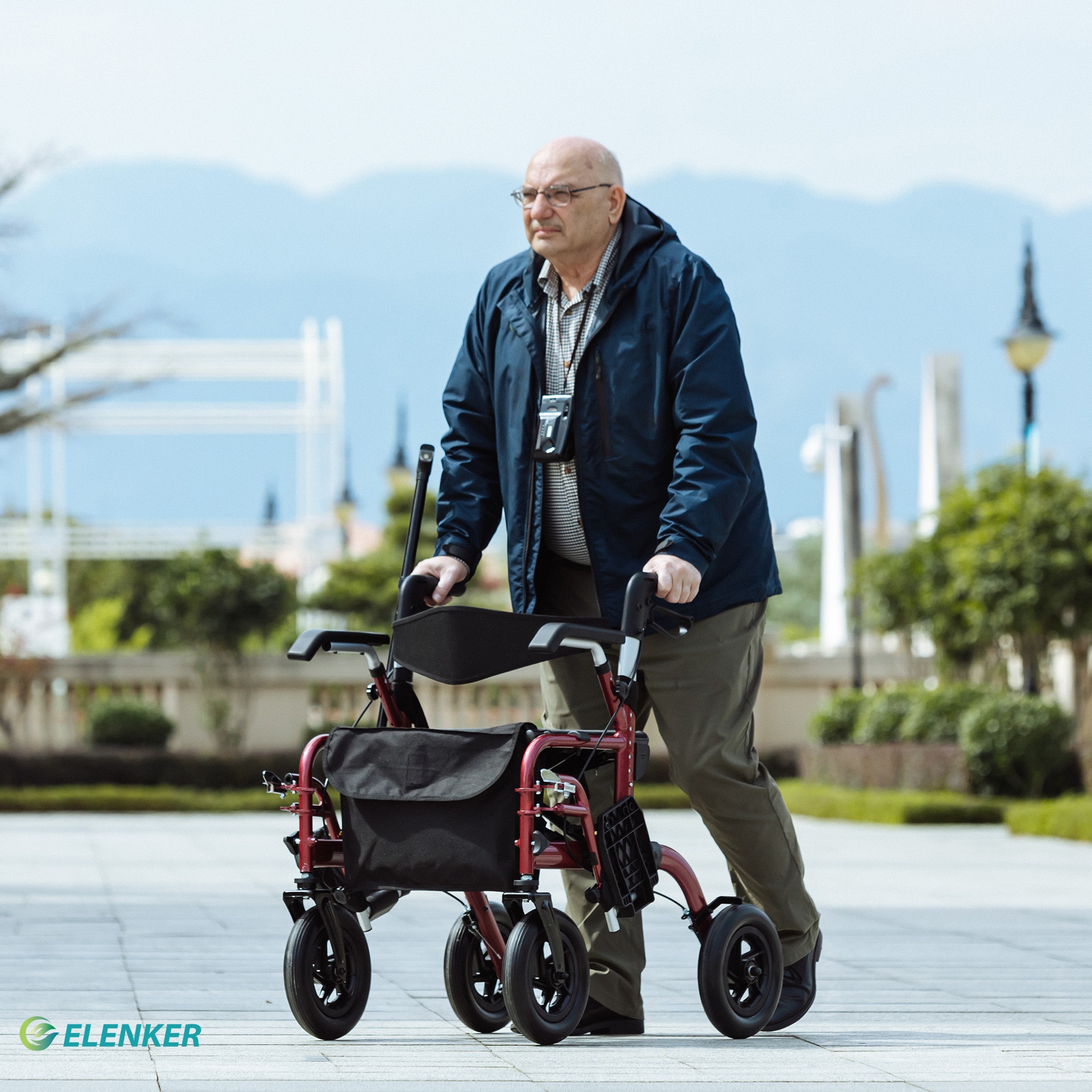
When it comes to mobility aids for the elderly, safety is a top priority. Among the different types of mobility aids available, rollator walkers are one of the most popular choices for those looking to regain some independence while staying safe. But are rollator walkers truly safe for the elderly? Let’s dive into why they can be a great option, but also look at some important considerations to make sure they’re used properly.
What is a Rollator Walker?
Before we talk about safety, let’s quickly go over what a rollator walker is. Unlike a standard walker, which requires the user to lift it with each step, a rollator has wheels on all four legs. This makes it easier to move around since you don’t have to lift it, just push it forward. Most rollators also come with a seat, which is great for elderly people who may need to rest often while out and about. Plus, many Elenker walkers and other models have extra features like hand brakes, storage baskets, and adjustable handles for added convenience and comfort.
For walkers for elderly individuals, rollators offer a combination of mobility, stability, and comfort, making them an appealing option. But, like any piece of medical equipment, there are a few factors to keep in mind to ensure they’re used safely.
Why Are Rollator Walkers Safe for the Elderly?
Easy to Maneuver
One of the key advantages of a rollator walker is how easy it is to maneuver. Unlike traditional walkers, which can be heavy and require lifting, a rolling walker simply rolls along, making it easier for elderly users to move around without putting too much strain on their body. This is especially beneficial for elderly individuals with limited strength or those dealing with conditions like arthritis. Elenker walkers are a good example of models that are lightweight yet sturdy, offering easy maneuverability without sacrificing durability. This can make walking feel less like a burden and more like a smooth, manageable task.
Comfort and Rest
Many rollators come with built-in seats, making them a great option for elderly individuals who need to take frequent breaks. The ability to sit down while out for a walk is a game-changer for many older adults, especially those who tire easily. Walkers for the elderly with a seat provide an opportunity to rest when needed, which is important for reducing fatigue and avoiding overexertion. The seat is also beneficial when shopping or running errands, as elderly users can take a break while waiting in line or looking for items in the store. It’s a small feature, but it adds a lot of convenience and comfort for everyday tasks.
Safety Features
Most rollator walkers are equipped with safety features like hand brakes, which help to keep the walker from rolling away when sitting or when the user needs to stop. These brakes are easy to engage and provide a sense of security, especially on slopes or uneven ground. Many Elenker walkers come with these built-in brakes, making them particularly user-friendly for elderly individuals who may struggle with balance. Additionally, the wheels on rollators are typically designed to handle both indoor and outdoor terrain, providing a smooth, stable ride over surfaces like sidewalks or carpets. Larger, durable wheels can make a big difference when it comes to safety, reducing the risk of the walker tipping or becoming stuck.
Potential Risks and Considerations
While rollator walkers can be safe, there are some important things to consider to ensure they are used correctly.
Improper Use of Brakes
As we mentioned, rollators often come with brakes, but these need to be used properly. Some elderly individuals might forget to engage the brakes when sitting on the walker, which can cause it to move or roll away. This can be dangerous, particularly when the user is trying to sit down or get up. It’s essential that the user becomes familiar with the brake system and uses it correctly every time they sit or stand. Some models, like Elenker walkers, have easy-to-use brake systems, but it’s important to ensure that the elderly person knows how to operate them.
Not All Rollators Are Suitable for All Environments
While rollator walkers are versatile, they’re not all suited for every environment. Some walkers for the elderly are designed primarily for smooth, indoor use. These walkers may struggle on rough outdoor surfaces or uneven terrain. If the elderly person plans to use their rolling walker for outdoor activities, it’s important to choose a model with durable wheels that can handle rougher surfaces like gravel or grass. Look for rollators with larger, sturdy wheels for outdoor use. Some models come with all-terrain tires, which can provide more stability when walking outside. If the elderly individual spends a lot of time outdoors, this feature is crucial for maintaining safety and comfort.
Balance and Strength
While rollator walkers are generally great for elderly people, they do require a certain amount of balance and strength to use effectively. If an elderly person has serious balance issues or struggles with coordination, they may find it difficult to navigate a rolling walker safely. In these cases, it’s a good idea to consult with a doctor or occupational therapist before choosing a rollator walker. They can recommend the best walker based on the individual’s specific needs and limitations. Additionally, some elderly individuals might prefer a walker with four legs (a standard walker) if their balance is a major concern, though this comes with the added challenge of having to lift the walker with each step.
Weight Capacity
Different rollator walkers have different weight capacities. It’s crucial to make sure that the rolling walker you choose can support the weight of the elderly person who will be using it. If the walker is not rated for the user’s weight, it may not be stable enough, or it could break over time. Always check the manufacturer’s weight limits before making a purchase.
Adjustability
The handle height on rollators is often adjustable, but some models may not adjust easily or at all. It’s important to choose a rolling walker with handles that can be set at the correct height for the elderly user. If the handles are too high or too low, it can lead to poor posture, discomfort, or strain on the user’s back and wrists.
In general, rollator walkers are a safe and effective mobility aid for many elderly individuals. They offer a combination of stability, comfort, and ease of use that makes them a great choice for walkers for the elderly. However, it’s important to make sure the user knows how to operate the walker safely and selects the right model for their environment and physical abilities.
Choosing a quality Elenker walker or another rollator walker with the right features, like easy-to-use brakes, adjustable handles, and durable wheels, will ensure that the elderly individual can move around safely and confidently. Always consult with a healthcare professional if you’re unsure which type of rollator is best suited for the user’s needs. When used properly, a rollator walker can be a great way for the elderly to stay active, independent, and safe.